Med Standards
- 4.2
- Rating
- 10.00K
- Installs
- Free
- Price

 Analysis by App-foxy
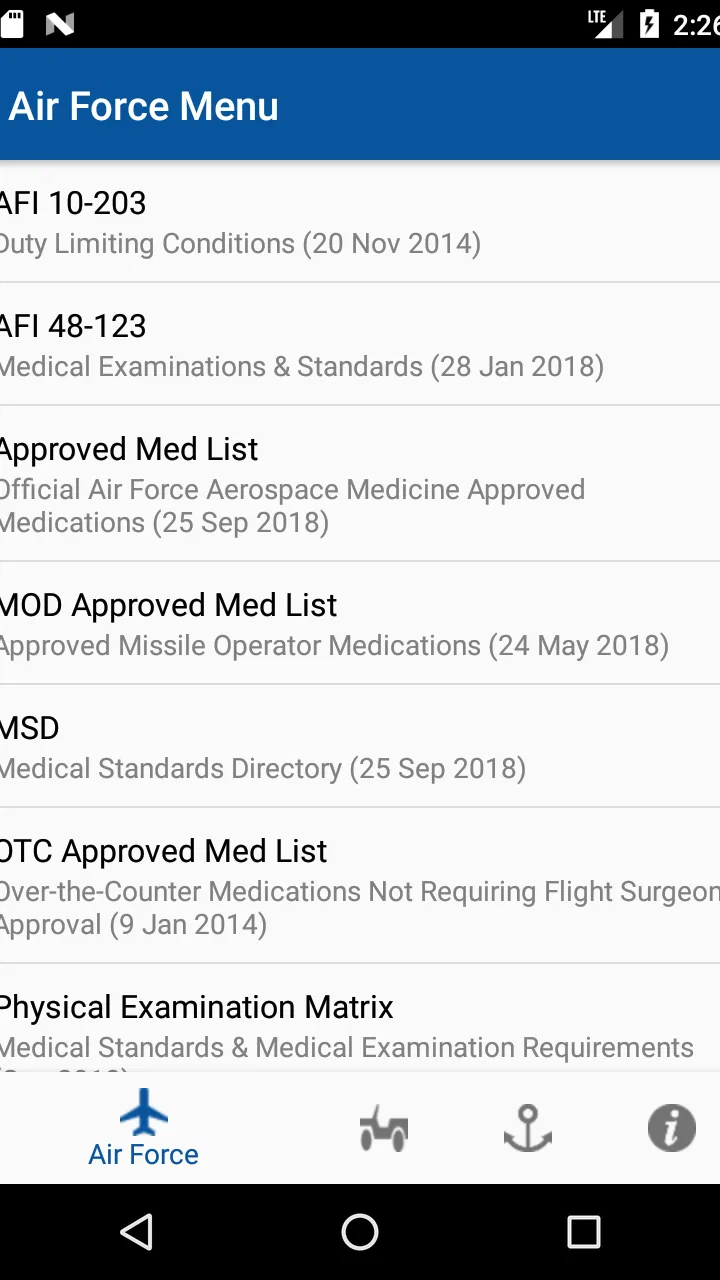
When I need a compact reference for military medical requirements, I prefer having the material organized in one focused place instead of searching through broad medical websites or scattered documents. Med Standards is built for that purpose: it brings together medical standards associated with the Army, Navy, and Air Force in a free medical app from KP Apps, LLC. I found its narrow focus more useful than a general health app when the question is about service eligibility or a condition that may affect a military medical review.
Med Standards is not a diagnosis tool, a symptom checker, or a replacement for a medical professional. Its value is as a reference companion. That distinction matters because a standard can help me prepare a better question, but it cannot decide an individual case by itself. I would use it before an appointment, while reviewing paperwork, or when trying to understand which branch’s requirements deserve closer attention.
Using the app as a dependable reference starting point
The most practical baseline workflow is simple. I open the app with a specific question in mind, identify the relevant branch, and then read the applicable medical information carefully rather than jumping to a quick yes-or-no conclusion. This approach makes the app less like a casual browsing tool and more like a pocket reference for structured research.
You May Also Like

 Blood Strike: 2.5 Anniversary
Blood Strike’s Loadouts Turn Every Drop Into a Tactical Gamble
A close look at Blood Strike’s custom loadouts: how fast access to signature weapons reshapes its battle royale rhythm, rewards preparation, and narrows the gap between fights.

 Pandora - Music & Podcasts
Pandora’s Music Is Easy to Start, but Harder to Recover
Pandora’s strength is its low-effort path from a seed to a station. Its weak spot is how much confidence it asks you to place in connection, setup, and quiet recovery.

 8 Ball Pool
 Is Built on Rivalries, Rematches, and Routine
A close look at the rivalries, rematches, shared routines, and unanswered safety questions that turn a quick pool match into a persistent mobile community.

 Samsung Music
’s Quiet Strength Is Playing What You Already Own
Its reach comes less from spectacle than from dependable access to a personal library. That simplicity is both the app’s strongest retention engine and its ceiling.

 AccuWeather: Weather Radar
AccuWeather Review: A Quick, Clear Forecast for Everyday Decisions
For everyday plans, the best forecast is the one you can understand quickly. AccuWeather makes rain timing, radar, and local conditions easy to act on, with a few trade-offs.

 Hill Climb Racing
Why Hill Climb Racing Still Turns Crashes Into One More Run
A tiny car, a bumpy hill and one more upgrade: Hill Climb Racing keeps resurfacing because its simple chaos makes every near-miss feel personal.
More From Our News Desk
View All News


That structure is especially helpful for people comparing the Army, Navy, and Air Force. Requirements can look similar at a glance, yet the branch context is important. I would avoid reading one section and assuming it automatically applies to the other services. A useful habit is to note the branch first, then the medical issue, and only afterward consider how the information relates to a personal situation.
In an everyday scenario, imagine someone preparing for a recruiter conversation after receiving an old medical diagnosis. Instead of relying on a forum comment, that person could use Med Standards to review the relevant material beforehand, write down unfamiliar terms, and bring focused questions to the recruiter or qualified medical professional. The app does not remove uncertainty, but it can make the conversation more organized and less dependent on memory.
The same workflow can help a parent, applicant, or service member who is trying to understand a medical document. I would read the surrounding section, not just search for a familiar word. Medical language often depends on severity, history, treatment, and documentation. A single matching term should therefore be treated as a starting point for further checking, not as a final ruling.
The app’s free price makes this kind of preliminary reference easy to try without committing to a subscription. It is also rated for Everyone, which suits a broad audience, although the subject matter is still more appropriate for people who have a genuine reason to research military medical standards. The current version is 2.1.1, and the app runs on Android 8.0 or later.
What I check before trusting a quick answer
I pay attention to whether I am looking at a general standard or a situation that requires professional interpretation. A reference app can explain the framework, but it cannot examine records, assess current health, or account for every exception. That is the first important trade-off: convenience and orientation on one side, individual judgment and official review on the other.
I also keep the date and context of any medical paperwork in mind. If I were using the app for an enlistment decision, I would not treat an old document, an informal online opinion, and the app’s reference material as equal forms of evidence. I would use the app to prepare, then verify the issue through the official process that applies to the person’s application.
This is where the app is stronger than a general search engine. Search results often mix current and outdated pages, civilian health advice, personal stories, and unrelated terminology. Med Standards keeps the subject centered on military medical requirements. The limitation is that a focused reference may not provide the broader clinical explanation that someone needs to understand a condition itself.
Settings and preparation that make each session more useful
There may not be much value in treating this as an app that needs constant customization. Its usefulness comes more from how I prepare to use it. Before opening it, I decide whether I am researching the Army, Navy, or Air Force, and I keep the exact wording from a medical record nearby. That small step reduces the chance of searching with a vague phrase and drawing an overly broad conclusion.
I would also keep a short note outside the app with three items: the term I searched, the section that seemed relevant, and the question that remained unanswered. This is a better workflow than repeatedly reopening the same pages without recording anything. It turns a quick lookup into a repeatable research habit, especially when several medical issues need to be discussed.
Another useful practice is to read slowly when the wording feels formal. Military standards are not written like everyday health advice, so skimming can make a qualification sound more absolute than it is. I found that the app works best when I treat each entry as reference material and give myself time to distinguish a definition, a requirement, and a possible exception.
For readers who expect notifications, account tools, cloud notes, or personalized health tracking, this is probably the wrong kind of app. Its appeal is its narrow reference role, not a full personal medical-management system. A general health app will usually be better for medication reminders, symptom journals, appointment tracking, or wellness goals.
The Android requirement is also worth checking before installation. Devices running Android 8.0 or newer should meet the stated minimum, while older phones are not a good fit. Since it is an Android app, iPhone users should look for a separate iOS option rather than assuming the same installation experience applies across platforms.
Faster patterns for repeat research
Experienced use is less about rushing through the material and more about reducing repeated work. When I revisit a topic, I begin with the branch and the precise medical phrase instead of browsing from the beginning. If the issue is complex, I compare the relevant branch sections deliberately rather than assuming that the first result is the most important one.
I also separate “what the standard discusses” from “what I need to ask.” For example, the first column in my notes might contain the app’s terminology, while the second contains questions about records, timing, treatment history, or professional evaluation. This prevents the common mistake of copying a phrase from a reference and treating it as a personal decision.
A second efficient pattern is to use the app before, not during, an important conversation. Reviewing the material in advance gives me time to look up unfamiliar words and identify gaps. During the appointment or recruiter discussion, I can then ask clearer questions instead of trying to interpret every sentence under pressure.
For families helping an applicant, I would recommend one person doing the initial reading and another checking the notes for assumptions. This is not because the app is difficult to use, but because medical eligibility discussions can become emotional. A second reader can notice when a conclusion has gone beyond what the reference actually explains.
The app’s audience size suggests that it is a specialized tool rather than a mainstream health platform: it has over ten thousand installs, an average rating of 4.2, and a relatively small review base of twenty reviews. I see that as useful context rather than a reason to dismiss it. The rating indicates that many users find the concept worthwhile, while the limited feedback means I would judge the app primarily by whether its focused reference matches my own need.
Where the reference approach reaches its limits
The biggest limitation is the risk of false certainty. Anyone researching a medical standard may want a straightforward answer, but real eligibility decisions can depend on documentation, history, examination, and official interpretation. Med Standards can help me understand the vocabulary and locate the relevant area; it cannot guarantee an outcome.
I would not use it to diagnose a condition, decide whether to stop treatment, or replace advice from a clinician. I also would not use a favorable-looking passage as permission to hide a medical history. For a high-stakes application, the safer workflow is to use the app for preparation and then disclose the situation accurately through the appropriate official channel.
Another limitation is scope. Because the app is centered on Army, Navy, and Air Force medical standards, it is not a complete military career guide. Someone looking for fitness training, recruiting timelines, benefits, occupational information, or general military news will need other resources. Likewise, someone who primarily wants clinical explanations may prefer a medical reference written for patients or healthcare students.
Comparing it with a web search produces a clear trade-off. Search engines offer more breadth and may surface official pages, current notices, and explanatory articles, but they also create more noise and make source quality harder to judge. Med Standards offers a quicker, more focused starting point, while official sources remain important when the decision carries serious consequences.
Compared with a general medical encyclopedia, the app is more relevant to military eligibility but less useful for understanding a condition from a treatment or everyday health perspective. Compared with a recruiter’s guidance, it gives me a way to prepare independently, but it cannot replace the recruiter’s role or the formal medical review. In my view, it works best between those two extremes: more targeted than general health content, but less authoritative than an official determination.
Who will benefit, and who should skip it
I would recommend trying it if you are researching military medical requirements for the Army, Navy, or Air Force and want a focused reference on an Android device. It can be particularly useful before a conversation with a recruiter, when reviewing an old diagnosis, or when organizing questions about a medical record.
I would also recommend it to users who prefer a direct reference instead of a broad collection of unrelated health tools. The free access lowers the barrier to testing it, and the Everyone rating makes it suitable for general audiences who are approaching the subject responsibly.
I would skip it if you expect personalized medical advice, a symptom checker, a treatment planner, or a complete application-management tool. I would also choose another resource if my main need were current official confirmation for a high-stakes decision. In that situation, the app may still help me prepare, but it should not be my final authority.
One practical caution is to avoid using a screenshot or remembered phrase as the whole basis for a decision. I would return to the relevant section, record the context, and confirm the issue with the proper professional or official contact. That habit is more important than finding the fastest possible answer.
My verdict after using it as a repeatable tool
Med Standards succeeds because it stays focused. KP Apps, LLC has created a medical reference aimed at a specific question: understanding standards connected with the Army, Navy, and Air Force. I appreciate that focus because it saves time when a general health app would send me through unrelated material.
Its best feature, in practical terms, is not a flashy shortcut. It is the ability to build a consistent process around a specialized reference: identify the branch, search using the exact medical wording, read the surrounding context, write down the unresolved questions, and verify important conclusions through the official route. That workflow makes the app more valuable than a one-time glance.
My honest recommendation is therefore conditional but positive. If you need a free Android reference for military medical standards, it is worth trying, especially on a device running Android 8.0 or later. If you need an answer about your own eligibility, use it as preparation rather than a verdict. The smartest way to use this app is to let it improve your questions, not pretend it can replace the people responsible for answering them.
With that expectation, the app earns its place as a practical companion for applicants, families, and anyone organizing medical-standard research. It is specialized, easy to understand in purpose, and useful when paired with careful note-taking and official confirmation. For broader health needs or personalized medical decisions, I would choose a different tool, but for its intended reference role, I found Med Standards focused and genuinely helpful.
FAQs for Med Standards
01What is Med Standards, and who is it designed for?
Med Standards is a medical reference app intended to help healthcare professionals, students, and other medically trained users consult clinical standards and guidance in a convenient mobile format. It can be useful during study, preparation, or routine professional work, but it should be treated as a reference tool rather than a replacement for clinical training, local protocols, professional judgment, or advice from a qualified healthcare practitioner.
02What type of medical information can I find in Med Standards?
The app focuses on organized medical standards and reference material that can help users review recommended practices, clinical concepts, and professional guidance. The exact subjects and depth may depend on the app version and available content. Before relying on any entry, users should check its publication date, source, and relevance to their country or institution, since medical recommendations can change and may differ between healthcare systems.
03Can Med Standards be used to diagnose or treat a patient?
Med Standards should not be used as an independent diagnostic or treatment tool. Although its reference content may support learning and clinical preparation, it cannot assess a patient’s complete history, examination findings, test results, allergies, or individual risks. Always follow current local guidelines and consult a licensed healthcare professional. In an emergency, contact emergency services instead of depending on information displayed in the app.
04Does Med Standards require an internet connection, and is all content available offline?
Offline availability depends on how the app distributes its standards and on the specific version installed on your device. Some sections may be accessible after downloading or syncing content, while updates, account functions, or certain resources may require an internet connection. It is worth opening the app before clinical use to confirm which materials are stored locally and when the information was last updated.
05Is Med Standards free, and are there privacy or account considerations?
The app’s pricing, subscriptions, sign-in requirements, and available features may vary by platform, region, and release. Review the Google Play or App Store listing before downloading to identify any in-app purchases or recurring charges. Also check the developer’s privacy information to understand what data may be collected. Avoid entering identifiable patient information unless the app explicitly provides appropriate, secure, and compliant functionality for that purpose.
Pros
- Clear reference for common medical standards and terminology.
- Useful for students
- clinicians
- and healthcare support staff.
- Information is organized for quick consultation.
- Can support consistent communication across medical settings.
- Helpful as a supplementary study and workplace resource.
Cons
- Some content may require regular updates as standards change.
- Not a substitute for official clinical guidelines or professional advice.
- Coverage may vary depending on the medical topic or specialty.
- Medical abbreviations can be confusing for beginners.
- Access to certain features or references may depend on the app version.

Med Standards
Gallery